
Gianni Caravaggio | Jane Swavely
Due mostre: Gianni Caravaggio, Sculptures with thoughts and feelings e Jane Swavely, My Little Pony.
Comunicato stampa
Jane Swavely
My Little Pony
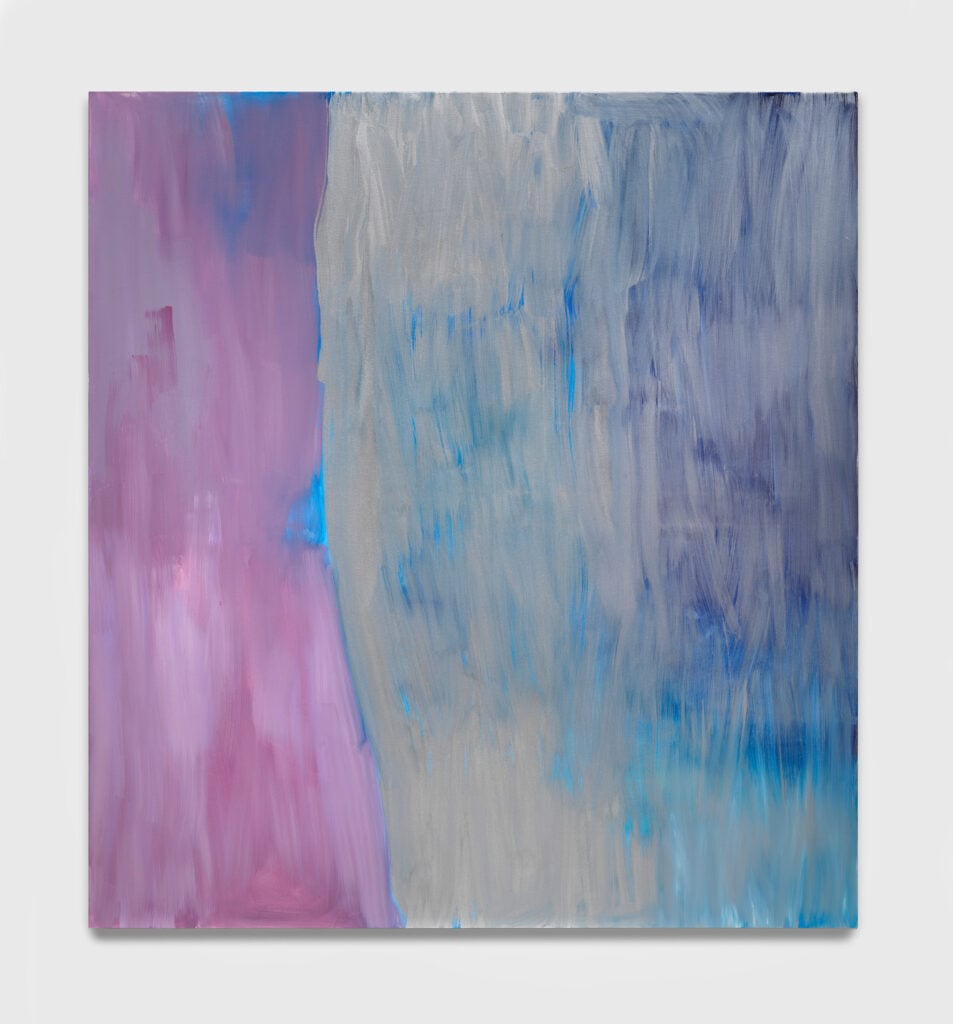
“The paintings point to the history of the medium while remaining firmly rooted in the present. I aim to create a space of light that can shift perception—at once familiar and unfamiliar—exploring the boundary between the conscious and the subconscious (…).”
— Jane Swavely, 2020
“The paintings are reductive but not minimalist. They embrace their objectness, leaving traces of their support and of the history of their making. The act is performative; the medium is the message (…). While they are being made, the painting itself is the subject.”
— Jane Swavely, 2024
I have known Jane Swavely for three years, since Paintings, her first exhibition at Magenta Plains in New York in 2024—a true revelation. While certainly not her first exhibition overall, it marked an important moment: the first presentation of her work within that specific context, and the beginning of a dialogue that has continued ever since. We became friends shortly thereafter, and during my frequent visits to the city, I often go to see her.
When I enter her studio on the Bowery, Jane doesn’t immediately talk to me about the paintings.
She moves them.
She pushes the large canvases against one another, slides them across the floor, hides behind them only to suddenly reappear, as if the painting were a curtain or a theatrical wing. The relationship is physical, direct, almost choreographic. Jane wears Adidas track pants, a camel sweater, short hair, and bright red lipstick. She is effortlessly elegant. Her body—lean, swift, precise—measures the space as she shifts enormous surfaces dense with color, as if they were lighter than they truly are.
She flips through her work before my eyes, one painting after another.
She doesn’t comment on them: she shows them.
At a certain point, she has me sit on a chair that looks salvaged from the street, perhaps from the 1980s. It is uncomfortable, well-worn, perfectly off-kilter. Behind me is New York. In front of me, her paintings become windows: openings into a world that is not representational but mental—constructed through layers, residues, and restraint.
In that moment, I realize that Jane Swavely’s work does not stem from the idea of an image, but from a corporeal relationship with painting. Her canvases are never detached objects: they are presences that demand to be traversed, moved, and reactivated in space. For her, painting is something encountered with the body even before the gaze.
From this physicality—so concrete, so anti-rhetorical—a practice deeply rooted in American art history takes shape, yet never illustratively. It is a painting attentive to surface, pressure, and perception: one that carries traces of Bay Area light, the structural rigor of Brice Marden, and the tensions articulated by New Image Painting, while ultimately moving toward an increasingly radical engagement with light and color as material conditions rather than expressive devices.
But none of this is ever merely cited.
It is enacted.
The Bowery studio functions as a resonance chamber. The street enters through the glass, the architecture reflects the light, and the city constantly presses upon the interior. Jane paints within this pressure. The paintings absorb this urban energy, hold it, and filter it. They function less as views than as instruments: surfaces that register the condition of being in the city rather than depicting it.
Jane arrived in New York in 1980, bringing with her an education from Boston University and a deep familiarity with California’s Bay Area painting. In those years, artists such as Richard Diebenkorn proposed broad chromatic fields, complex spatial relationships, and an atmospheric approach to structure that left a lasting impression on Jane’s early thinking about painting. Diebenkorn, in particular, informed her understanding of the figure as a mark within a field rather than as a narrative protagonist—an idea she absorbed early through sustained engagement with catalogs and reproductions during her university years.
In 1978, even before moving to New York, Jane encountered the landmark exhibition New Image Painting at the Whitney Museum of American Art, which reopened figuration after Minimalism through reduced, emblematic forms. Artists such as Susan Rothenberg and Neil Jenney proposed a painting in which the figure functioned as a charged sign within a structured field—an approach that resonates with Jane’s understanding of painting as pressure rather than representation.
In 1980s New York, Jane worked as an assistant to Lois Lane, an experience that provided not only technical knowledge—particularly in handling and preparing large-scale canvases—but also an ethical discipline of making. From Lane, she absorbed the idea of a painting sustained by persistence: rigorous in gesture, yet open to emotional tension.
Equally formative was her five-year period working with Brice Marden beginning in 1980. Marden offered Jane a structural grammar rather than a stylistic template. With him, painting became a plane: a flat object where surface, support, edge tension, and material decisions carry as much weight as color or mark. These lessons—often transmitted more through posture and practice than instruction—remain embedded in her work today: in the attention to stretcher bars, in compositional restraint, in the silence between one gesture and the next.
Jane’s involvement with A.I.R. Gallery also played a central role. As one of the first feminist artist-run spaces in the United States, A.I.R. functioned for her not merely as an exhibition venue but as a school of positioning. Painting there was understood as a relational act—shaped by dialogue, collective responsibility, and shared listening. This ethical dimension of painting as a communal practice continues to underpin her work.
While Henri Matisse was an important reference during Jane’s earlier, more explicitly figurative period, her later work moves decisively elsewhere. Looking back, artists such as Clyfford Still and Barnett Newman—though not central to her thinking at the time—have become increasingly relevant points of reference. Their engagement with scale, chromatic intensity, and the painting as a total field resonates strongly with the direction her work has taken.
A pivotal shift occurred during the Covid period, when Jane began making what she calls her “green screen” paintings. Working constantly within this chromatic condition, the landscape gradually disappeared. Painting became fully abstract—not as a stylistic decision, but as a consequence of sustained looking and prolonged immersion. Color ceased to frame space and instead became space itself.
Alongside this artistic genealogy runs another equally decisive line: Jane’s daily, unmediated relationship with New York, and specifically with the Bowery, which she has inhabited for over forty years. From her lofts—first on Spring Street and later on the Bowery, both with floor-to-ceiling windows—she experienced the city almost at street level, as if inside its continuous flow.
She has witnessed the transformation of the neighborhood: the urban voids of the eighties, the open light of the Lower East Side before the towers, the construction sites, demolitions, and the arrival of reflective architectures that now bounce and refract light back into the studio. This changing luminosity—no longer diffused but reflected, filtered, and intensified—has directly shaped her most recent paintings.
What makes Jane Swavely’s work so necessary today is precisely this capacity to hold together genealogy and vulnerability, discipline and risk, history and desire. Her paintings do not declare their sources; they activate them. They do not ask to be deciphered, but to be traversed.
Fabio Cherstich
Gianni Caravaggio
Sculptures with thoughts and feelings
During my journey across the Alps, I find myself in awe at the sight of a majestic mountain ridge, delicately covered by the season’s first snowfall. The mist just below the crest veils it, making it seem as though it were floating in the air. This entire vision, and the emotion it stirs, appear to exist outside of me. And yet they arise because I feel such a natural spectacle echoing within my deepest memory — something that is in me but does not belong to me: it secretly inhabits me. The dissolution of the self in a cosmic experience seems to contradict the tendency to withdraw into everything. Perhaps I could say that, if a portrait of me were ever to exist in such a moment, it would be one of complete surrender, of abandoning myself in wonder before the other. I step aside; I offer everything to the one who is perceiving.
Sculpture harbors a particular possibility of confrontation with the other because it is, first and foremost, a thing, a body, and by its very nature it resists narcissistic projection, like a comet unexpectedly attempting to penetrate our atmosphere. Even if we use things with increasing technical determination, reducing their apparent physical resistance, they still oppose us with a demanding psychic resistance, so that only in moments of grace can they secretly appear animated and, in turn, animate us. This resistance of sculpture’s “thingness” offers the viewer two possibilities: to reassure oneself with what is casually recognized as material or figure, or to perceive the opportunity for a listening that takes place outside oneself. Such listening — the attentive, sensitive perception of what stands before us — may unexpectedly bring forth images that have atavically and primordially inhabited us, yet which we do not possess as certainties. Listening, therefore, is not confirmation, but a shared participation in a possible imaginative dimension evoked by something other.
Within this perceptual and evocative dimension, sensations become true. Like a portion of mountain veiled by mist, a wedge-shaped piece of alabaster covered with a sheet of opaline paper appears as a faint two-dimensional phantom, before revealing the full mass that lies beneath. An entire alabaster rock — an ovoid petrification formed in the Upper Miocene through the concentration and evaporation of marine waters trapped in closed basins — is gradually cut into sections shifted in one direction, and thus appears like a cloud moved by the wind, as if unveiling its own feelings. This wind also seems to trace the trajectory of two serpents, gleaming in the light of two different metals, that part and reunite along a straight line and appear to encounter a limit only in the circumference of the globe. Two stone slabs — one of white alabaster and the other of Belgian black marble — seem to have long nurtured the design that has emerged upon their surface: the cloud-like structure of the white alabaster appears to have announced the first rain, and the delicate white veins in the black marble have finally illuminated the three light bulbs in the constellation of Orion. Outside, beneath the plants in the courtyard, a piece of Guatemala green marble, in the sunlight, remembers having once been a leaf.
gianni caravaggio was born in 1968 in rocca s. giovanni (chieti), italy, and was raised in sindelfingen, germany. he currently lives and works between milan and stuttgart.
he studied philosophy in germany before moving back to italy to attend the academy of fine arts in milan, where he is currently a professor of sculpture. a student under luciano fabro, caravaggio shares with him a decision to renew the sculptural idiom by combining traditional materials such as marble with other, more unconventional ones, including talc, paper, and lentils.
selected solo and two-person exhibitions include: unforeseen (with johannes wald), galerie stadt sindelfingen (2025); per analogiam, galleria d’arte moderna – gam, turin (2024); when nature was young, kunstmuseum, reutlingen (2021); iniziare un tempo, museo novecento, florence (2018); sostanza incerta, the open box, milan (2017); about things bigger than us, galerie de expeditie, amsterdam (2016); finalmente solo / enfin seul, musée d’art moderne et contemporain de saint-etienne métropole, saint-etienne (2014); museo maga, gallarate (2014); and scenario, collezione maramotti, reggio emilia (2008) among others.
his work has been exhibited in numerous group shows, including recently: cutting clouds / tagliando le nuvole, madre, naples (2024); vita nova: arte in italia alla luce del nuovo millennio, villa d’este, tivoli (2022); arte povera italian landscape, metropolitan museum, manila (2020); noi e il masi. donazione giancarlo e danna olgiati, masi, lugano, (2018); collezione acacia, museo del novecento, milan (2016); avviso di garanzia, fuori uso, ex tribunale di pescara, curated by giacinto di pietrantonio and simone ciglia (2016); il pane e le rose, fondazione arnaldo pomodoro, milan (2015); and ritratto dell’artista da giovane, castello di rivoli, turin (2014) among others.
among various prizes, gianni caravaggio was awarded with the premio acacia (2013); the castello di rivoli prize (2008); and the special fund prize, ps1, new york (2002).
Nel mio viaggio attraverso le Alpi mi meraviglio alla vista di una maestosa cresta di una montagna e di come essa sia delicatamente coperta dalla prima nevicata. La nebbia poco sotto la cresta la vela, e pare farla galleggiare nell’aria. Tutta questa visione e la commozione emotiva sembrano situarsi fuori di me. Eppure, si generano perché sento echeggiare tale spettacolo naturale nella mia memoria profonda, che è in me ma non la posseggo: essa segretamente mi abita. Tale dissoluzione dell’io in un’esperienza cosmica sembra contraddire la tendenza a ritrarsi in ogni cosa. Potrei forse dire che, se mai esistesse il ritratto di me in un istante simile, sarebbe quello dell’abbandono completo nello stupore dell’altro. Mi scanso, offro tutto a chi sta percependo.
La scultura cova la particolare possibilità del confronto con l’altro perché è innanzitutto una cosa, un corpo, e, per tale natura, crea resistenza a una proiezione narcisistica, come una cometa che inaspettatamente cerca di penetrare la nostra atmosfera. Anche se le cose sono usate da noi con sempre più caparbietà tecnica, ponendo apparentemente sempre meno resistenza fisica, non mancano di opporci un’ardua resistenza psichica, tanto che solo in momenti di grazia possono apparirci segretamente animate e, quindi, animarci. Tale resistenza dell’“essere cosa” della scultura lascia allo spettatore due possibilità, rassicurarsi con quello che riconosce distrattamente come materiale o figura, oppure percepire l’opportunità di un ascolto fuori di sé. E tale ascolto fuori di sé, l’attenta percezione sensibile di ciò che si trova di fronte, potrebbe inaspettatamente far sorgere delle immagini che atavicamente ci abitano fin dagli arbori ma che non possediamo come certezza. L’ascolto, quindi, non è una conferma, ma un compartecipare a una possibile dimensione immaginativa evocata da qualcosa di altro.
In tale dimensione percettiva ed evocativa, le sensazioni diventano vere. Come una parte di montagna velata dalla nebbia, un pezzo di alabastro cuneiforme è ricoperto da un foglio di carta opalina e traspare come un leggero fantasma bidimensionale prima di rivelare tutta la sua massa reale sottostante. Una roccia intera di alabastro – una pietrificazione ovoidale prodotta in natura nel Miocene superiore dalla concentrazione e dall’evaporazione di acque marine intrappolate in bacini chiusi – è tagliata gradualmente in varie sezioni spostate in una direzione e appare così come una nuvola, mossa dal vento per svelare i propri sentimenti. Questo vento pare anche tracciare la traiettoria di due serpenti che brillano nella luce di due metalli differenti, che si lasciano e si ritrovano su una linea retta e sembrano trovare limite solo nella circonferenza del globo. Due lastre di pietra, una di alabastro bianco e l’altra di marmo nero del Belgio, paiono aver da sempre covato il disegno comparso sulla loro superficie: la struttura nuvolosa dell’alabastro bianco sembra aver annunciato la prima pioggia, e le sottili venature bianche sul marmo nero hanno infine illuminato le tre lampadine in costellazione di Orione. Fuori, sotto le piante del cortile, un pezzo di marmo verde Guatemala, alla luce del sole, si ricorda di essere stato una foglia.
Gianni Caravaggio è nato nel 1968 a Rocca S. Giovanni (Chieti), Italia, e cresciuto a Sindelfingen, Germania. Attualmente vive e lavora tra Milano e Stoccarda.
Ha studiato filosofia in Germania prima di tornare in Italia per frequentare l’Accademia di Belle Arti di Brera, dove è attualmente professore di scultura. Allievo di Luciano Fabro, Caravaggio condivide con lui la decisione di rinnovare l’idioma scultoreo combinando materiali tradizionali come il marmo con altri più inusuali, tra cui talco, carta e lenticchie.
Gianni Caravaggio ha tenuto mostre personali e bipersonali in istituzioni italiane e internazionali, tra cui: unforeseen (con Johannes Wald), Galerie Stadt Sindelfingen (2025); Per Analogiam, Galleria d’Arte Moderna – GAM, Torino (2024); When Nature Was YOUNG, Kunstmuseum, Reutlingen (2021); iniziare un tempo, Museo Novecento, Firenze (2018); Sostanza Incerta, The Open Box, Milano (2017); About Things Bigger Than Us, Galerie De Expeditie, Amsterdam (2016); Finalmente Solo / Enfin Seul, Musée d’art moderne et contemporain de Saint-Étienne Métropole, Saint-Étienne (2014); Museo MAGA, Gallarate (2014); e Scenario, Collezione Maramotti, Reggio Emilia (2008).
Le sue opere sono state esposte in numerose mostre collettive, tra cui recentemente:Cutting Clouds / Tagliando le nuvole, Madre, Napoli (2024); Vita Nova: arte in Italia alla luce del nuovo millennio, Villa d’Este, Tivoli (2022); Arte Povera Italian Landscape, Metropolitan Museum, Manila (2020); Noi e il MASI. Donazione Giancarlo e Danna Olgiati, MASI, Lugano (2018); Collezione Acacia, Museo del Novecento, Milano (2016); Avviso di garanzia, Fuori Uso, ex tribunale di Pescara, a cura di Giacinto di Pietrantonio e Simone Ciglia (2016); Il Pane e le Rose, Fondazione Arnaldo Pomodoro, Milano (2015); e Ritratto dell’artista da giovane, Castello di Rivoli, Torino (2014).
Tra i vari premi, Gianni Caravaggio ha ricevuto il Premio Acacia (2013); il Premio Castello di Rivoli (2008); e il Premio Special Fund, PS1, New York (2002).
