Koen Vanmechelen – We Thought We Were Alone
Mostra personale.
Comunicato stampa
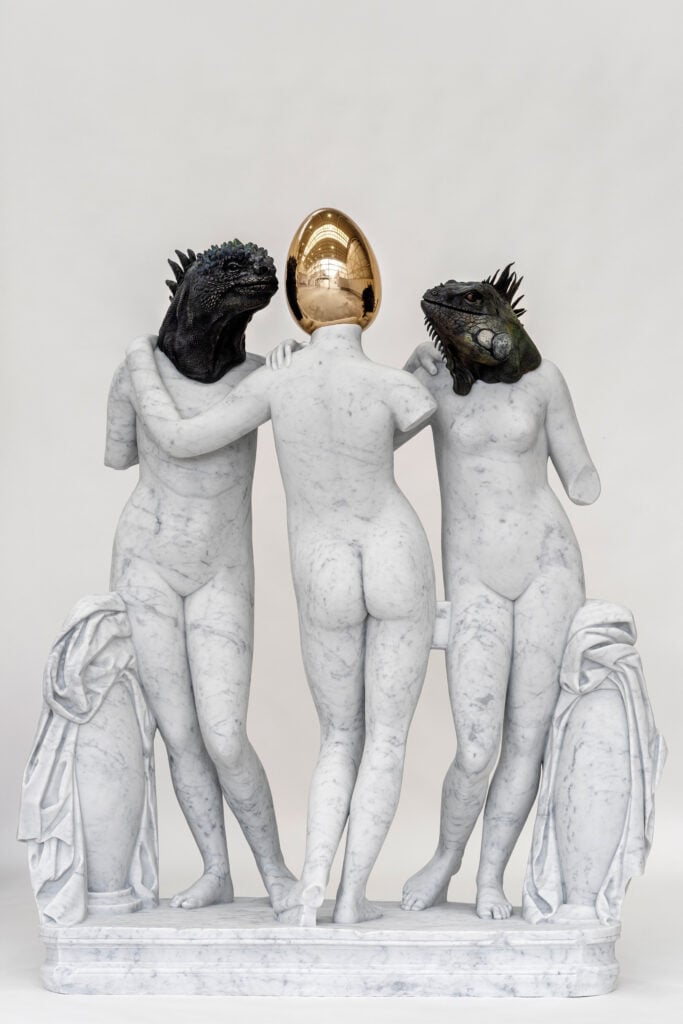
Belgian artist Koen Vanmechelen presents We Thought We Were Alone, his first solo sculptural exhibition in Venice, coinciding with the 61st International Art Exhibition of La Biennale di Venezia. Curated by James Putnam, the exhibition brings together 40 new sculptures and installations — created specifically for the occasion — across the three floors of Palazzo Rota Ivancich.
Moving beyond human-centred perspectives, the exhibition explores the dynamic relationship between living organisms and the inorganic environment. Spanning themes of crossbreeding, hybridity, and identity – at the core of Vanmechelen's vision of a Cosmopolitan Renaissance – it positions art as a positive force capable of inspiring social and biological transformation. Materials including bronze, marble, glass, photography, and video are brought together to create a dialogue between past and future, matter and form, inheritance and transformation.
Palazzo Rota Ivancich is not merely a backdrop but a structural part of the exhibition: a layered interior where rooms become thresholds, and the building's own history of repair and reinvention echoes the show's central themes. Moving across its three floors, the visitor experiences the palazzo as a "cocoon" – a space where forms loosen, reconfigure, and return changed. Classical statuary is reinterpreted amid a diverse menagerie of animal forms, while the works interconnect biology and culture, the local and the global, solitude and solidarity.
We Thought We Were Alone marks a significant evolution in the conceptual practice of Vanmechelen. The works begin with reinterpretations of classical sculptures such as Medusa and The Three Graces, but move beyond these references to explore how artworks are shaped through relationships and collaboration. Rather than existing as isolated objects, they take form through networks of human, animal, and ecological connections — challenging established boundaries while encouraging dialogue and social understanding, and placing human life within the wider, interconnected systems of global ecosystems and sustainability.
Koen Vanmechelen says: “For centuries we thought we were alone. We imagined ourselves at the centre of all things – the measure of progress, the author of peace, the keeper of paradise and the pinnacle of evolution. As the exhibition unfolds the animals reveal themselves, not as metaphors or relics, but as messengers of a different truth. In their gaze, we confront the price of our domestication - how we tamed the world and, in doing so, lost our own wildness. This is not nostalgia for a lost Eden, but a confrontation with the limits of human exceptionalism. Nature does not need our pity, only our willingness to coexist. The minor key of survival is not conquest, but reciprocity and hybridity”.
The exhibition also features a dedicated room exploring Wild Gene Festival, a collaboration between Vanmechelen and celebrated Senegalese musician Youssou N'Dour. Originally staged on 1 August 2025 at LABIOMISTA, the festival transformed the site into an open-air stage, where live music by N'Dour and Le Super Étoile de Dakar intertwined with Vanmechelen painting a monumental nine-metre canvas in real time. At the Palazzo, two videos document the community that brought the festival to life, creating a shared space of music, ritual, and collective creativity.
