

Clara Hastrup – Remote Control
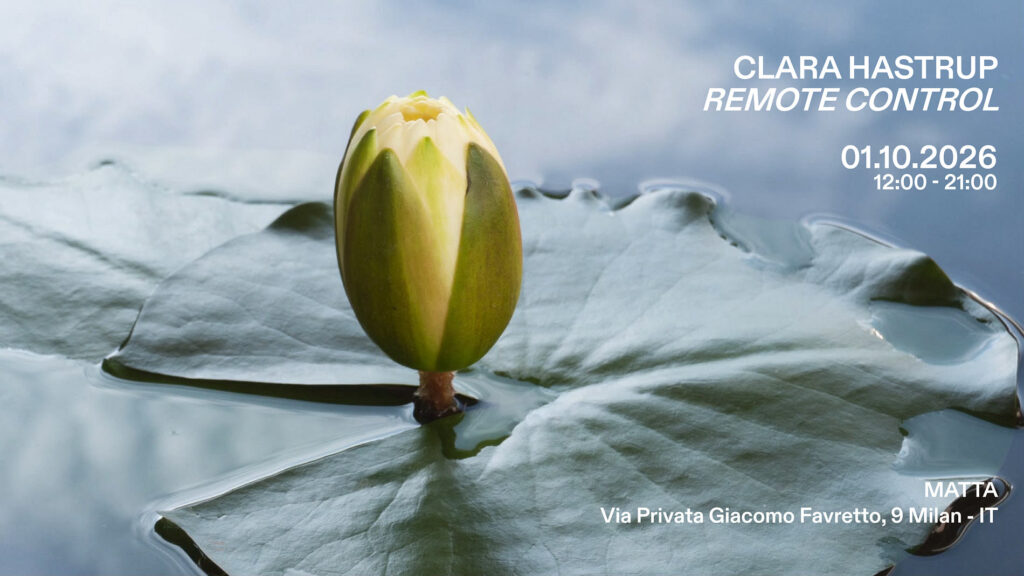
Comunicato stampa
Fu la radio a parlare per prima.
«Vento», disse.
La lampada si accese.
«Quanto?»
«Abbastanza.»
Abbastanza per cosa. Per far tremare una finestra, girare una banderuola, portare via il cappello a qualche povero bastardo. Lì dentro bastava a far parlare una radio. La lampada squarciò il pavimento con un fascio di luce, scavalcò fili e polvere e raggiunse uno dei quattro schermi piantati nei vasi. Sullo schermo un fiore cominciò ad aprirsi.
«È mattina?» chiese.
«Qui dentro sì», disse la lampada.
Dall’altra parte della stanza c’erano cinque recipienti: una bottiglia, una caffettiera, un flacone di detersivo, una pressa francese e una teiera. Dentro, liquidi di colori diversi. Salivano e scendevano seguendo acque lontane. Pioggia, maree, correnti sotterranee. Acque che non avevano mai visto e non avrebbero visto mai.
Eppure continuavano a muoversi dentro di loro.
I romani portavano l’acqua sopra la terra. I persiani sotto. Pietre, scavi, secoli di fatica. Tutto per aprire un rubinetto.
«Sale», disse la teiera.
«Cosa?» fece la radio.
«L’acqua.»
«Dove?»
«Da qualche parte.»
«Bella risposta di merda.»
La teiera ci pensò. Il livello salì di un altro millimetro.
«Sale lo stesso.»
Una raffica entrò nella radio. Uno schiocco secco, poi una parola. Poteva essere qui. O chi. La lampada si voltò verso il secondo monitor. Si aprì un fiore rosa.
«Mi ha chiamato qualcuno?»
«No», disse la bottiglia.
«Può darsi», disse la radio.
«Allora?»
Nessuno rispose. La radio captava il vento a chilometri di distanza, ma non sapeva a chi fosse destinato.
Per un po’ piovve. Il liquido rosso salì nel suo recipiente. La lampada piegò il collo e lo raddrizzò. Sugli schermi i fiori restavano aperti, rivolti verso una stanza che non sapeva di terra.
«Siamo vivi?» chiese la pressa francese.
«No», disse la bottiglia.
«Sì», disse la teiera.
«Chiedilo quando salta la corrente», disse la radio.
La pressa voleva sapere come avrebbe fatto.
Lasciò perdere e ascoltò la pioggia. Ora veniva giù più forte. Il rosso aveva raggiunto il collo del recipiente e continuava a salire.
«È una brutta cosa?» chiese il fiore rosa.
«È acqua», disse la teiera.
«Questo lo vedo.»
«Allora ne sai quanto me.»
Quando fu notte, il vento si fece cattivo. Colpiva la radio a raffiche. La radio sputava brandelli di suono nella stanza; la lampada si girava ogni volta, cercando di afferrare una parola. Due volte trovò un monitor.
Due volte si aprì un fiore. Alla terza puntò il muro.
«Lì non c’è niente», disse la bottiglia.
«Ho sentito qualcosa.»
«Tu senti sempre qualcosa.»
La lampada tenne la luce sul muro. Nel fascio galleggiava la polvere. Una crepa sottile correva dal soffitto fino alla presa dove si incontravano tutti i fili. Magari era lì da anni. La lampada non l’aveva mai guardata.
Poi il vento smise.
La radio tacque. La lampada restò sulla crepa. Uno dopo l’altro, i liquidi colorati si fermarono tutti alla stessa altezza. I fiori aspettavano, spalancati sui loro schermi, come se aspettare non costasse niente.
Alla fine parlò la teiera.
«L’acqua scende.»
«Dove va?» chiese un fiore.
«Via.»
La lampada lasciò il muro.
Passò con la luce sul primo schermo e tirò dritto.
Il fiore cominciò a chiudersi.
«Aspetta», disse.
La lampada si fermò.
Quel fiore non aveva mai parlato mentre si chiudeva. I petali si raccoglievano piano, dentro la poca luce rimasta.
«Che vuoi?» chiese la lampada.
«Non lo so.»
La lampada aspettò. Aspettarono la radio, i cinque recipienti e gli altri tre fiori. Non arrivò niente. Dopo un po’ la lampada riprese a muoversi e il fiore si chiuse.
Tornò un filo di vento.
Sfiorò l’antenna della radio e se ne andò.
«C’è vento», disse la radio.
«Quanto?» chiese la lampada.
La radio ascoltò finché la raffica non fu passata.
«Quanto basta per un altro.»
La lampada si voltò verso l’ultimo monitor.
La luce cadde su uno stelo nero. In cima spuntò un bocciolo. Si schiuse. Era un fiore.
Guardò i recipienti, i fili, la polvere che brillava nell’aria. Guardò la lampada, che era arrivata fin lì e avrebbe continuato a muoversi.
«È questo, il silenzio?» chiese.
La radio crepitò una volta sola.
«È quello che abbiamo.»
Pier Francesco Petracchi
----
The radio spoke first.
“Wind,” it said.
The lamp came on.
“How much?”
“Enough.”
Enough for what. Enough to shake a window, turn a weather vane, blow a hat off some poor bastard’s head. Here it was enough to make the radio speak. The lamp sent a blade of light across the floor, over the wires and the dust, to one of the four monitors planted in flowerpots. On the screen a flower began to open.
“Is it morning?” it asked.
“In here,” said the lamp.
Across the room stood five vessels: a bottle, a coffee pot, a detergent container, a French press, and a teapot. They held liquids of different colours. The liquids rose and fell with water elsewhere. Rain, tides, underground streams. Water in places they had never seen and would never see, though it moved inside them all the same.
The Romans carried water over the earth. The Persians carried it beneath. All that stone, all that digging, just to have it come out of a tap.
“It’s rising,” said the teapot.
“What is?” asked the radio.
“The water.”
“Where?”
“Somewhere.”
“That’s no use.”
The teapot considered this. Its level rose another millimetre.
“It’s still rising.”
A gust went through the radio. It gave a sharp crackle and a word that might have been here or hear.
The lamp turned toward the second monitor.
A pink flower opened.
“Did someone call me?” it asked.
“No,” said the bottle.
“Possibly,” said the radio.
“Which is it?”
Nobody answered. The radio could receive a wind from miles away but could not tell who it was for.
For a while there was rain. The red liquid climbed in its vessel. The lamp bent its neck and straightened it again. On the screens the flowers stayed open, facing a room in which nothing smelled of earth.
“Are we alive?” asked the French press.
“No,” said the bottle.
“Yes,” said the teapot.
“Ask when the power’s off,” said the radio.
The French press wanted to ask how it would manage that. Instead it listened to the rain. There was more of it now. The red liquid had reached the neck of its vessel and kept climbing.
“Is that bad?” asked the pink flower.
“It’s water,” said the teapot.
“I can see that.”
“Then you know as much as I do.”
By night the wind had grown rough. It struck the radio in bursts. The radio spat fragments across the room; the lamp turned at each one, trying to catch a word. Twice it found a monitor. Twice a flower opened. The third time it turned toward the wall.
“There’s nothing there,” said the bottle.
“I heard something.”
“You always hear something.”
The lamp held its light on the wall. Dust showed in the beam. A small crack ran from the ceiling to the socket, where all the wires met. It had been there for years, perhaps. The lamp had never looked at it.
Then the wind stopped.
The radio went quiet. The lamp remained fixed on the crack. One by one the coloured liquids settled at the same height. The flowers
waited on their screens, wide open, as if waiting took no effort.
At last the teapot spoke.
“The water’s going down.”
“Where is it going?” asked a flower.
“Away.”
The lamp turned from the wall. Its light crossed the first monitor and moved on. The flower there began to close.
“Wait,” it said.
The lamp stopped.
The flower had never spoken while closing before. Its petals drew together slowly in the light that remained.
“What do you want?” asked the lamp.
“I don’t know.”
The lamp waited. So did the radio, the five vessels, and the other three flowers. Nothing came. After a while the lamp moved on, and the flower closed.
A little wind returned. It touched the radio’s antenna and passed through.
“There’s wind,” said the radio.
“How much?” asked the lamp.
The radio listened until the gust was gone.
“Enough for one more.”
The lamp turned to the last monitor. Its light fell on a dark stem. A bud appeared at the top of it, unfolded, and became a flower.
It looked at the vessels, the wires, the dust bright in the air. It looked at the lamp that had come all this way and would go on moving.
“Is this the silence?” it asked.
The radio crackled once.
“It’s what we get.”
Pier Francesco Petracchi
