Tatiana Defraine – Figures du soir
Mostra personale.
Comunicato stampa
Text by Delfina Pattacini
ITA
Clarissa Pinkola Estés evoca la Donna Selvaggia come una forza primordiale, una sapienza antica che non si impara ma si ricorda. In Women Who Run With The Wolfs, correre con i lupi non è fuga, ma ritorno: all’istinto, al battito originario del sé. È da questo luogo interiore che la mostra prende forma, là dove la meraviglia affiora nella mente e il vagare prende possesso del corpo.
Entrare nell’ universo di Tatiana Defraine è come scivolare in Glisser: un abbandono lento, un sonno lieve, una petite mort. Le bocche si schiudono, il respiro si approfondisce, e allo sguardo è chiesto di lasciarsi condurre. Defraine distilla le proprie ricerche interiori nella pittura, aprendo una soglia verso la sublimazione. Il vagabondare diventa una deriva dell’anima. La meraviglia tace: sospesa, attende parole perdute o ancora inesistenti, pronte a nascere nell’incontro dello sguardo di chi osserva.
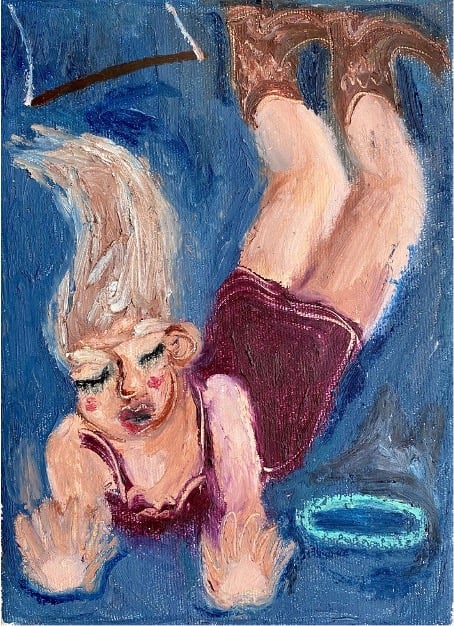
Il mondo di Defraine si dispiega come un attraversamento psichico, una discesa dolce e vertiginosa nella perdita di controllo. Figure compresse, tracciate da segni di pastello a olio simili a rossetto e immerse in correnti di blu e di verde, si distendono su tele ampie, fino a invadere e avvolgere lo spazio. I lupi si moltiplicano: presenze ambigue, minaccia e protezione insieme. Essi incarnano la paura, ma non ne sono separati. Correre con i lupi significa farsi lupo. L’ignoto cessa di essere ostile e si offre come guida. La paura persiste, ma smette di paralizzare. L’artista è inseguita e, proprio in questa tensione, si libera.
In eco all’archetipo di La Loba, la Donna Lupo non osserva il branco da lontano: lo abita, lo incarna. La bestia è ciò che vi è di più naturale, di più vero. La domanda non è come domarla, ma come accoglierla, nutrirla, ascoltarla. La trasformazione del corpo diventa un aspetto centrale, come la maternità che ha riconfigurato la vita di Defraine. Aprendo nuovi equilibri e nuove percezioni, il corpo si muove come un circense: tra trapezi sospesi, cerchi di fuoco e animali in corsa. Rischio, precisione e abbandono convivono. Il gesto è esposto allo sguardo, come il dipinto che si offre nella sua vulnerabilità.
Quando riconosciamo che è il branco di lupi a guidarci, tutto diventa possibile. Emily Dickinson ci ricorda che siamo sempre in pericolo di magia. Stiamo vivendo un sogno lucido? Una memoria remota? O una visione di una vita futura?
ENG
Clarissa Pinkola Estés writes of the Wild Woman as an instinctual force. In Women Who Run With the Wolves, she describes a knowing that is not learned but recovered. To run with wolves is not an act of escape, but of return to instinct. This exhibition begins in that terrain: where wonder stirs in the mind and wander takes hold of the body.
Upon stepping into Tatiana Defraine’s exhibition, Glisser guides us into a state of rest: a soft sleep, a petite mort. Mouths open, breath deepens, and the viewer is invited to join the ride. Defraine transmutes her quests into paint, opening a doorway to sublimation. This act becomes the escape of the soul. Wonder does not speak; it remains silent, waiting for lost words, or for those yet to be born through the spectator's lens.
Defraine's universe unfolds as a psychological passage, a descent into loss of control. Claustrophobic figures, traced by lipstick-like oil pastel textures and immersed in fluid blues and greens, stretch across large canvases, extending and enveloping. Wolves appear in multiplicity, at once threatening and guiding. They embody fear, yet are not separate from the self. To run with the wolves, one must become one. The unknown ceases to be an enemy and becomes a guide. Fear is inevitable, but no longer paralyzing. The artist is pursued, and simultaneously liberated.
Echoing the archetype of La Loba, The Wolf Woman does not command the pack from a distance; she is the wolf herself. The beast is what is truly natural. The question is not how to suppress it, but how to invite it in and cultivate it. Transformation becomes central. As motherhood reshaped Defraine’s life with new balance and perception, the body adapts like a circus performer navigating trapezes, fire rings, and galloping animals. Risk, precision, and surrender coexist. The performer is watched while performing, just as the painter presents a new body of work.
Once we understand that the wolf pack is guiding us, we can wonder. Emily Dickinson reminds us that we are always in danger of magic. Is this sensation a lucid dream? A regression into a past life? Or a vision offering a passage into a new one?
